
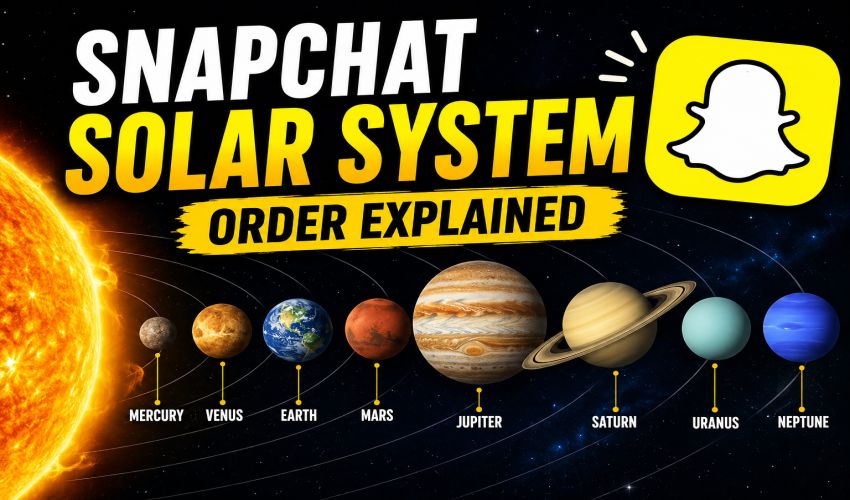
The Snapchat Solar System Order is one of the more popular things you can get with Snapchat+, like that premium subscription. It lets people get a sense of their friendship rankings by placing planets near their closest friends. And if you ever had that “wait, what does the Snapchat Solar System even mean?” thought, or you’re curious about how the planet rankings actually work, then this guide should clear it up, step by step, with everything you need.
What Is the Snapchat Solar System Order?
The Snapchat Solar System Order appears as a feature in Snapchat+, the platform’s premium plan. It takes your top eight friends and shows them as planets in one solar system, while you’re shown as the Sun. Each planet lines up with a specific spot from your Best Friends list, as the position matters.
The nearer a planet sits to the Sun, the better, or stronger, your back and forth is with that person on Snapchat. This whole ranking is put together from things like snaps you send, chats you have, stories you watch, and just your overall engagement.
Snapchat Solar System Order List
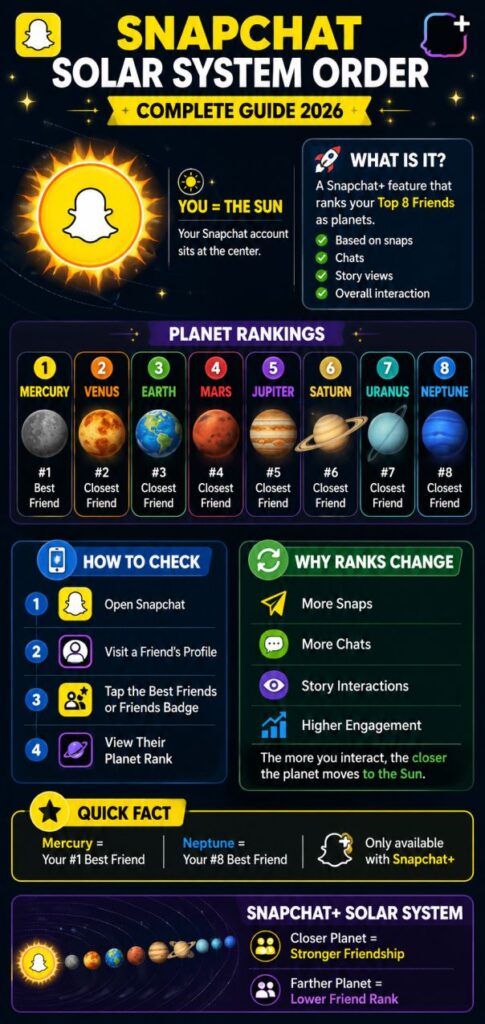
Here’s the full list, step by step, even if it feels a bit too neat sometimes.
- Mercury: Mercury is basically your number one best friend on Snapchat. This is the person you’re talking to the most, through snaps and chats and all that.
- Venus: Venus goes with your second closest friend. Not the very top person, but you still exchange messages pretty often, like regularly.
- Earth: Earth stands in for your third closest friend in the Snapchat ranking setup.
- Mars: Mars marks your fourth best friend, based on how much you interact and the numbers.
- Jupiter: Jupiter is handed to the friend in the fifth spot on your Best Friends list. It’s like a crown, just for the rankings
- Saturn: Saturn represents your sixth closest Snapchat friend, pretty straightforward.
- Uranus: Uranus is for your seventh-ranked friend. Simple as that.
- Neptune: Neptune is the last planet in the Snapchat Solar System Order, and it shows your eighth closest friend.
How Do You Check Your Snapchat Solar System Order?
So, to see the Snapchat Solar System Order, you usually need an active Snapchat+ subscription. Then you do it like this, straightforward.
1. Open Snapchat
2. Go to a friend’s profile, like tap their name from your list or something
3. Find the “Best Friends” or “Friends” badge
4. Tap that badge, and it should show their planet ranking inside your solar system
What you’re looking at tells you where that person sits in your closest Snapchat connections, so basically their rank in your own system.
Why does the Snapchat Solar System Order keep changing?
The Snapchat Solar System Order isn’t stuck in one place. It updates based on how you use the app. So, if you start sending more chats or snaps to one friend and you do less with another, their planet ranking can shift later on. And a few things like this matter a lot
- How often you send snaps, and how often you receive them
- How much chat activity you both have
- How you interact with stories
- Your overall engagement levels
Because of all that, your Snapchat solar system might feel different from week to week, like the planets rearrange themselves.
Final Thoughts
The Snapchat Solar System Order is like a playful and interactive method to picture your closest friendships on Snapchat. With the whole planets thing, Snapchat just assigns those “solar bodies” to your top eight friends, so it becomes pretty simple to see who you end up chatting with the most. Whether you’re already a Snapchat+ subscriber, or you’re thinking about upgrading soon, knowing the Snapchat Solar System Order can really help you get more out of this odd little social feature in your daily snaps.
Frequently Asked Questions (FAQs)
What is the order of the Solar System on Snapchat?
- Mercury
- Venus
- Earth
- Mars
- Jupiter
- Saturn
- Uranus
- Neptune
Which planet is number one on Snap?
On Snapchat, the number one best friend is represented by the planet Mercury in the Friend Solar System. This feature, exclusive to Snapchat+, visually ranks your closest friends in orbit around you (the Sun) based on your frequency of snaps and chats.

BrumeBlog.com explores future technology, AI, cybersecurity, digital innovation, gadgets, and emerging trends, delivering insightful content that helps readers stay ahead.